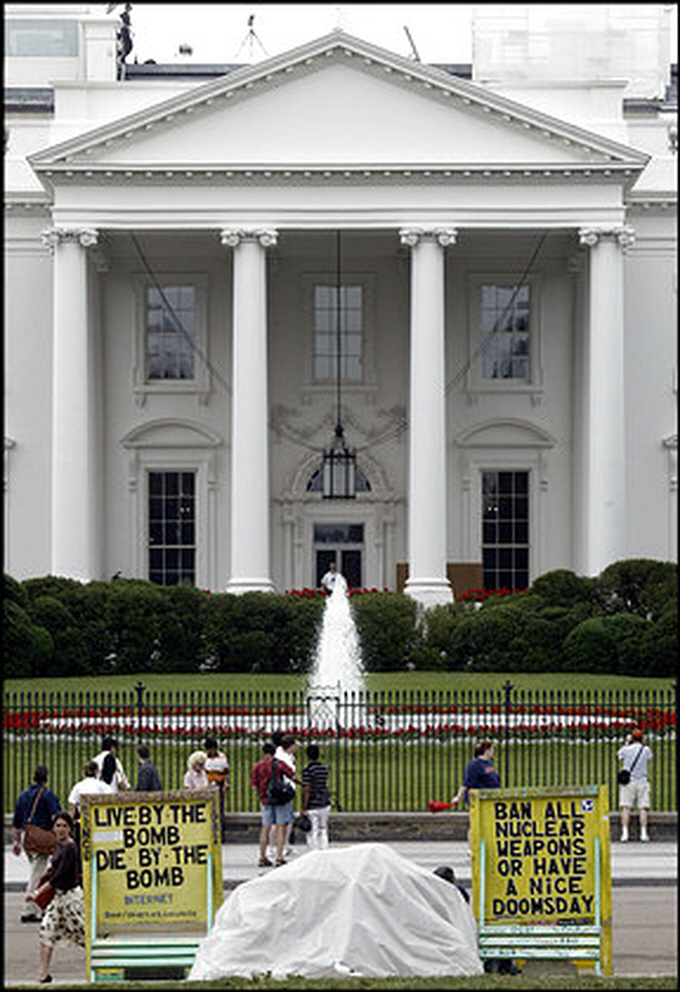
Since June 3, 1981, eight years to the day (EST) before tanks rolled into Tiananmen Square, signs calling for "Wisdom and Honesty," justice and nuclear disarmament have stood every day and night in front of the White House. To those who maintain perhaps the longest continuous vigil in human history, the signs represent the ancient right -- Thomas Jefferson may have termed it "the duty" -- of people in a democracy to voice opinions on issues of broad public concern. According to National Park Service figures the signs have been seen by nearly fifty million people. Lafayette Park (Peace Park) is America's premier, historic location for individuals and organizations to bring grievances before the president and the public. This section contains information on People, Protests and the Current Situation in Lafayette Park. (Well, maybe you should go to
William Thomas Memorial page on Facebook for the truly current situation in Lafayette Park. Share YOUR photos and memories there as well!)